China
Zibo, Shandong
Have Any Question
+86 13176580621
Send Your Mail
nathan@nanzhimachinery.com
Zibo, Shandong
+86 13176580621
nathan@nanzhimachinery.com
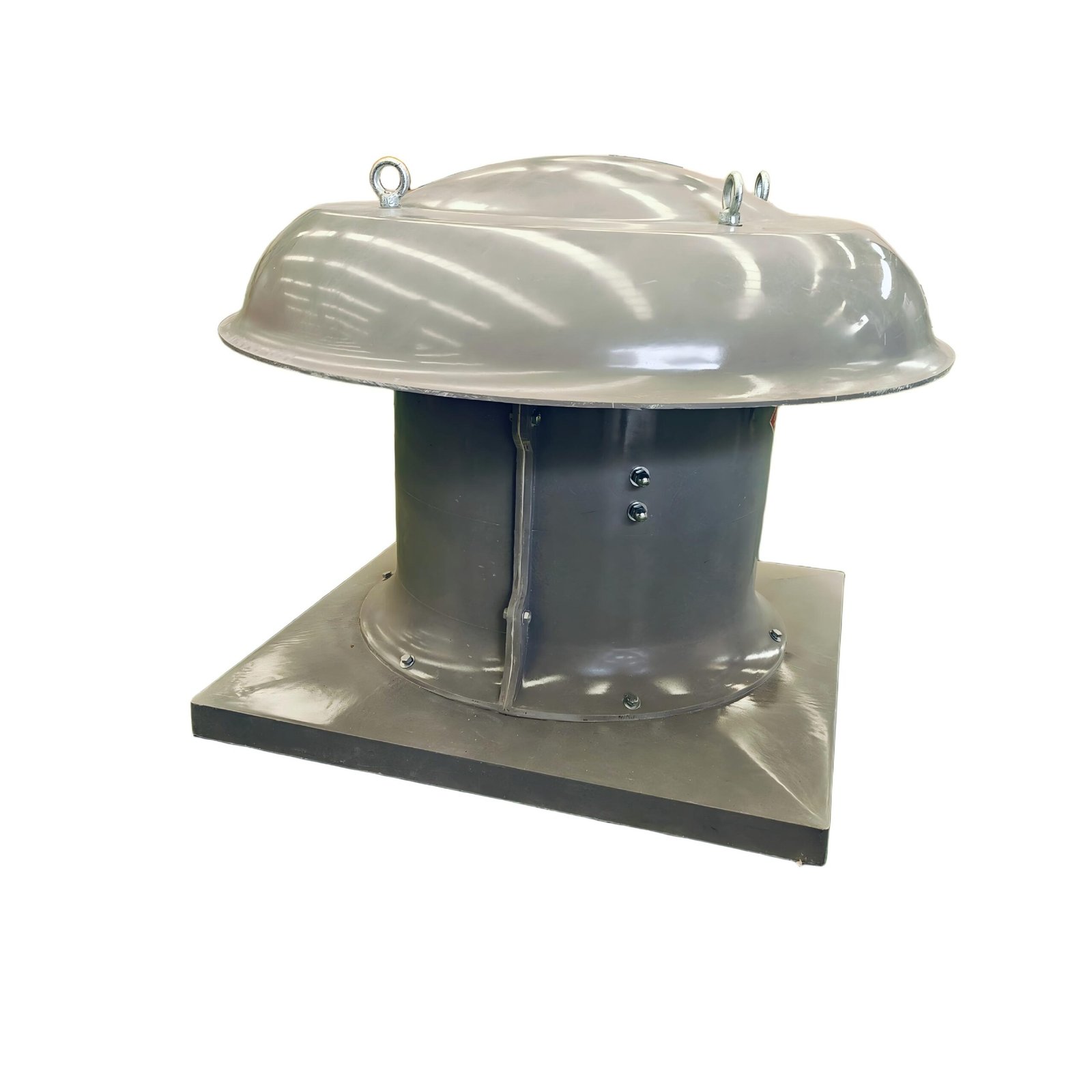
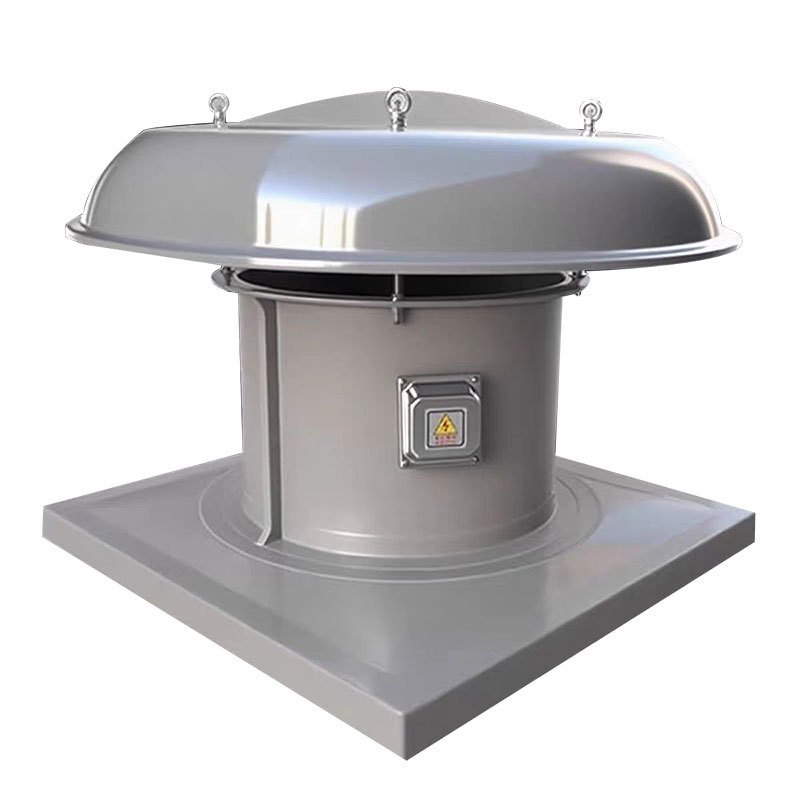
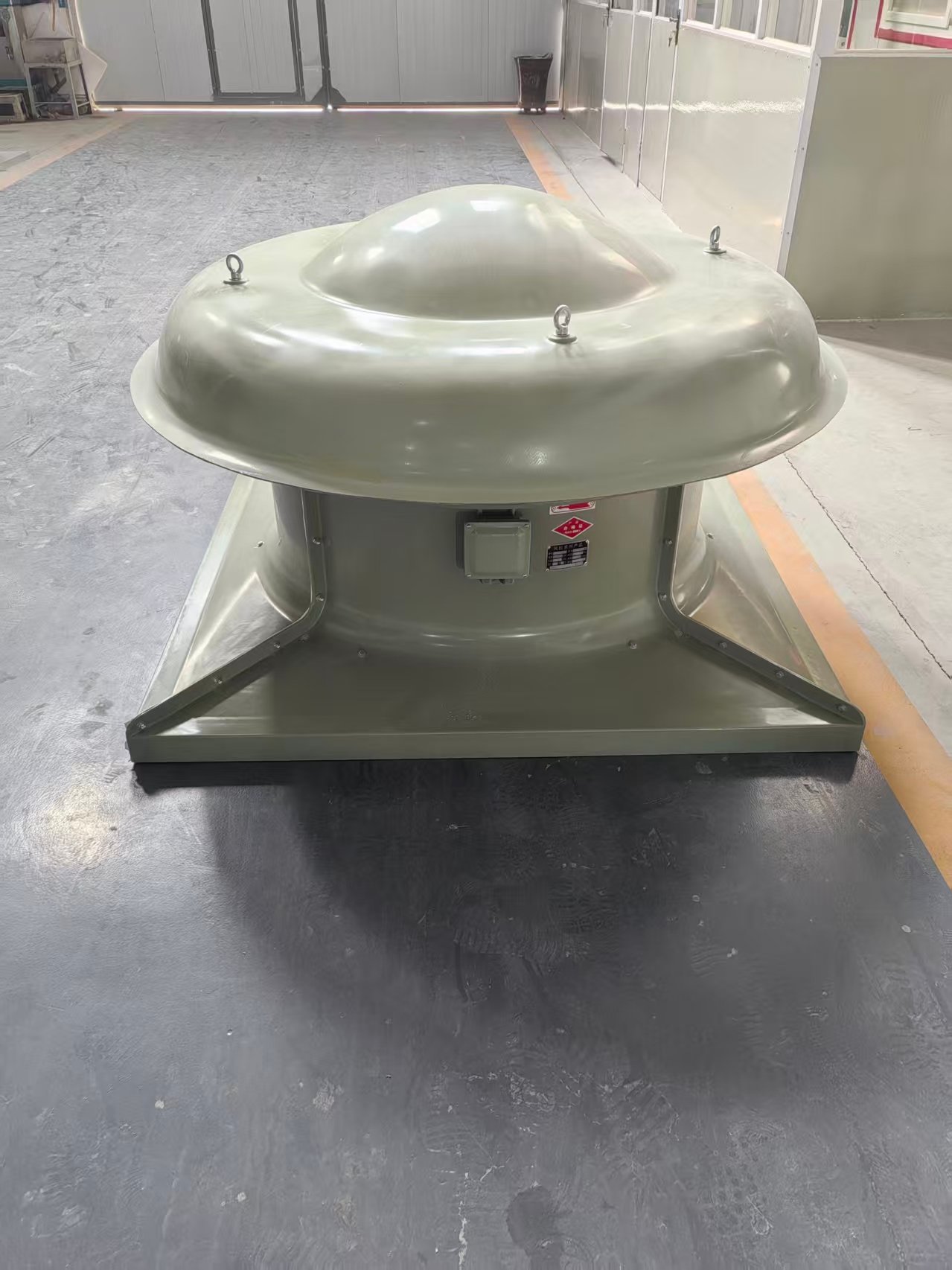
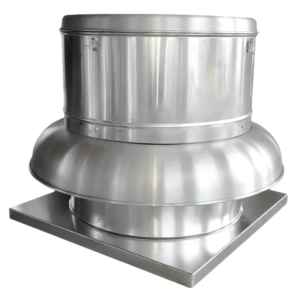
Axial Flow Roof Fan – Product Introduction
The axial flow roof fan (typical model: DWT-I) is a ventilation device installed on building rooftops. Its airflow direction is parallel to the blade axis, offering high air volume with moderate static pressure. This fan series features a molded axial-flow impeller and a dedicated motor with direct drive. The complete unit mainly consists of the impeller, fan casing, cowl, transmission components, hinged dampers, bird screens, safety nets, and other parts.
The axial flow roof fan delivers high airflow with lower pressure compared to centrifugal fans, making it suitable for applications with short or no ductwork and direct exhaust.
With wide blades, large chord length, spatially twisted and inclined blade profiles, and CAD multi-objective optimization, the fan achieves the required airflow and pressure at low rotational speeds, effectively reducing noise.
Key components such as the casing and cowl can be manufactured from FRP (fiber-reinforced plastic), offering corrosion resistance, aging resistance, and light weight. Depending on the corrosiveness of the medium, the impeller can be made of ABS (engineering plastic), FRP, or aluminum alloy.
Low moment of inertia and high dynamic balance accuracy ensure stable long‑term performance, exceeding industry standards.
Upon request, the fan can be designed for reversible operation, providing equivalent performance in both forward and reverse directions, enabling dual-purpose supply and exhaust ventilation.
The cowl is made of FRP with smooth curved surfaces. Alternatively, it can be manufactured from steel with galvanized and powder‑coated finish per customer requirements.
Axial flow roof fans are widely used in the following fields:
– Industrial plants: ventilation and exhaust in power plants, chemical plants, rubber factories, machinery manufacturing, metallurgy, paper mills, etc.
– Commercial buildings: air exchange in shopping malls, gymnasiums, cinemas, underground parking garages, and other crowded spaces.
– Warehousing and logistics: forced exhaust and heat dissipation in warehouses and distribution centers.
– Agriculture: ventilation, temperature and humidity control in farms and greenhouses.
– Special environments: available in corrosion‑resistant versions (for chemical, electroplating, wastewater treatment, and other corrosive environments) or explosion‑proof versions (for flammable and explosive locations).
 English English
 Chinese
 Russian English English Chinese Russian